The bluebird of happiness aka “fun”

There’s been a lot of chatter about the efficacy and power of social media. Sometimes, it seems that’s all we talk about.

The discussion invariably revolves around SM as a tool of some sort, as if it were a digital Swiss Army Knife. Which it is. The debate is typically whether SM is truly useful to marketers, scientists, researchers, lawyers, teachers and more. Which it is.

Probing deeper, the conversation quickly turns to more ethical questions: Does SM impede our ability to process information and sort through ideas? Will it overtake legitimate analysis? Does it hurt our children? I myself recently asked, Have we become content zombies?

Yes, no, maybe so.

But one thing has been completely overlooked, if not lost, in these myriad discussions. And it is perhaps the biggest thing of all. Namely that social media –all social media- is fun.

Fun.

Think about it. Facebook was created to make “friends.” Myspace exists to share music -things that are fun. (Ostensibly, both help folks ‘hook up’ and last I checked that was fun too.) It’s called Twitter for Christ’s sake. You don’t name something Twitter and give it a blue bird (of happiness) for a logo unless you want it to be fun.

Revelation! Social media was created to have fun. Its usefulness, immense as it is, came after the fact, making those aspects secondary.

So, next time you’re at a social media conference, digital summit or whatever the hell they’re calling it, have a good time. The guru blathering from the podium sure as hell is.

Follow me on Twitter

The Happy Soul Industry website


A little “Kiss.” Call a doctor; I’m gonna be sick.

I wasn’t going to write about the Super Bowl’s advertising orgy but seeing as I tweeted throughout the game I might as well finish what I started.

Headline: The game was good. The ads were not. Period. As one of my Twitter companions pointed out: “Does god-awful sound reasonable? The most expensive dreck ever produced.”

Even the Who (looking like aging creative directors) got it up better than most of the advertisers –and they’re like a hundred years old.

The best spot by far was the lone entry from Google. Simple and lovingly produced, the product was truly a hero. Telling a story via numerous searches was as inspired as it was obvious. A small masterpiece.

My favorite campaign, by default, goes to E-Trade. Tired as those babies are, they still made me laugh. Especially the one belting out “Milk-a-what?” You had to be there.

The worst ad? Where to begin? For it’s pointless waste of tons of money I give the dubious honor to a Bridgestone TV commercial. In it, a road warrior-like clan stops a racecar demanding the driver surrender his tires or his life. The driver pushes a babe out of the car and races off. The evil clan’s leader yells: “not your wife, your life!” To coin a phrase: So funny I forgot to laugh. Reminiscent of a lousy Capital One commercial, the thing was badly cast, poorly produced and born from a concept lacking any insight into the product or human nature. That the discarded wife was ridiculously hot only added to the spot’s confused tone.

Speaking of hot babes, I could easily point to Go Daddy for second runner up as crappiest campaign of the night. But giving them a number one on this list seems like a lay-up. Besides, that’s what Go Daddy wants, isn’t it? “See,” the dirt bags at Go Daddy would say, “we riled up America again!” I won’t give them that satisfaction. And will somebody please tell Danica she’s not all that?

They’ll test well, but I also pretty much hated the work from Doritos. In one spot we discover a man inside a coffin stuffed with Doritos. He died a happy man. Get it? Lord knows eating that many Doritos will kill you…

Odd as hell: There were two ads featuring nude people (Career Builder and a car commercial whose make I’ve already forgotten) one after the other. And speaking of odd as hell redundancies, what are we to make of the midget Kiss band followed by shrunken Pittsburg Steeler, Troy Polamalu? Dwarves and nudists times two. Where else but in the Super Bowl?

The controversy over the rightwing Tim Tebow ad? The spot came and went like a gnat. No one was even listening. Yawn.

The big winner of the Super Bowl: Drew Brees and the New Orleans Saints. With the Who and Google getting honorable mentions. On to March Madness.

Follow me on Twitter

Order The Happy Soul Industry on Amazon


Must…have…content!

In the highly entertaining Tobe Hooper film, Life Force the human population are turned into ravenous creatures that must suck the essence of life out of other human beings every few minutes or die. Without going into plot (in this case alien invasion), the streets of London are quickly turned into a maelstrom of carnage. Half dead zombies grab onto the living, draining them. The drained then come back to “life” looking for new victims to drain. And so on.

Typically, zombies do not dwell on one meal for long. Unthinking creatures, they rip into one victim after another, leaving the dead and dying in their relentless search for fresher meat. Of course, the bitten quickly “turn” and well you know the rest.

It’s pretty scary…the stuff of nightmares. Many observers have likened the popularity of zombies in our culture to not-so-latent fears about the economy or terrorism; that these ghouls symbolize a loss of control. It also has been suggested that we see ourselves in these mindless creatures, an even scarier thought -for how quickly our appetites run amok. Neither view is wrong. As one of the remaining mortals exclaims during George Romero’s remake of his own classic film, Night of the Living Dead: “We are them.”

Perhaps sadly, it’s also a metaphor for the effect social media is having on more and more of us every day. Earlier, I wrote an essay calling us “content zombies.” No longer able to process information, we rip through new media biting and chewing and spitting out content, barely digesting any of it. Ravenously, we move on to the next. Indeed, barely chewed facts, items and stories pass through us onto the web like offal. Our constant tweets and updates are mere bits and pieces, carrying links like so many worms, each containing the shred of something devoured earlier. Or something like that.

I myself am turning. Last night I tried reading an article in a magazine. I found myself jumping over paragraphs, skipping entire chunks, gluttonous. Unsatisfied, I started another article. Then another. Within minutes I was in front of my laptop lapping up more, more and more!

Already an addictive personality, once I taste blood I cannot stop gorging. The more I feast the less I retain. A vicious cycle if ever there was one. God help me for I am a content zombie. I am legend.


Art in a box!

Even if they are neighborhood rivals, I’ve got to give Energy BBDO props for creating a spectacular experiential marketing campaign on behalf of the Art Institute in Chicago.

Made to coincide with the opening of the Art Institute’s hyper-stylish Modern Wing, the agency (in partnership with the museum) developed “500 Ways of Looking at Modern.” In it, 500 creatively constructed cubes –some big, some small- were hidden all over the city. Each contained a code, which could then be registered on a website for prizes and the like.

In an article for the Chicago Tribune (the second on the subject), Lauren Viera wrote that only 314 cubes have been registered. With tongue firmly in cheek, she reported that perhaps the remaining cubes end up on Ebay as collector’s items. Along these lines, the museum added another link to their website, 500-Ways/lost in hopes of finding the remaining “lost” cubes.

It’s all in fun, of course. And it’s brilliant. Creating a game around these boxes gets people thinking outside their boxes –about modern art and the Art Institute. The campaign manages to be childlike and sophisticated at the same time, which, correct me if I’m wrong, is just about the perfect definition for modern art.

Using our city as a backdrop and activating its citizenry is spot on for the brief: how to find modern art in Chicago. Employing social media during the hunt and being able to register cubes online closes the deal nicely.

The fact that the Chicago Tribune has written two decent stories on the event is a success in its own right. After all, isn’t publicity what the Art Institute was looking for? That numerous cubes are still “missing” makes the idea even more fun, not to mention giving it social currency and staying power.

Bravo, Energy BBDO. This is pretty cool.

Follow me on Twitter

Order my novel on Amazon

I was honored to judge the Philadelphia ADDY Awards this weekend. While I did not get to see much of the city I did view a mess of advertising and assorted marketing communications. As is usually the case, this show had a few remarkable pieces, some that were god-awful and lots in between. As far as the winners are concerned, I took a vow of secrecy. I will say the judges were fair and fairly unanimous. The hot category was multi-media, with several fine examples of guerilla and experiential work. Numerous high marks given there.

Refreshingly, I saw no dubious work i.e. potential scam ads. That’s saying something. Indeed, I heard the ‘radio’ we’d just judged in a cab and saw various billboards that were in the show on the highway. In other words: IT WAS REAL! Kudos to the Philadelphia advertising community for their integrity and to Alan Tempest of the Philly Ad Club for putting on such a solid, straight show. The PAC should also be commended for assembling a diverse panel of judges. Of five, three were black. I wish I didn’t have to write how unusual that is.

I’m always amazed by the amount of mundane work that gets submitted to advertising award shows. Here was no exception. For example, we saw many TV commercials featuring little more than a voiceover reading strategy over pictures of the product. No concept. Zip. I realize the world is full of such advertisements. But in an awards show? This I don’t get. Why would an agency or client submit work (paying entry fees and filling out forms) that has absolutely no chance of winning a prize? Every creative director knows the criteria for award-winning material, even if they don’t produce much of it themselves. Don’t get me wrong. Doing so-so work isn’t a crime and neither is entering it into an awards show. It’s just dumb. Yet, I’ve never judged a show (local, regional, national and even global) where the vast majority of entered material wasn’t mediocre.

My agency does plenty of work that isn’t outrageous or remarkable. (I’m not apologizing for it; I’m just being honest.) But because of knowable, rigorous standards in judging criteria, we don’t enter it into awards shows. There is a vetting process. We do not want to waste money or embarrass ourselves. When determining entries, we look at our work with hypercritical eyes. We make many kills.

Therefore, when I see an ad entered into competition that features stock images of people shaking hands or staring into their computers accompanied by copy about “state-of-the-art business solutions,” I say loudly and profoundly: What were they thinking?

Follow me on Twitter

Order my novel on Amazon


“Super Size this you clown!”

According to Wikipedia, “the ‘Happy Meal’ was the brainchild of St. Louis, Missouri advertising manager Dick Brams, who in 1977 contracted both Kansas City-based advertising firm Bernstein-Rein and Stolz Advertising Company of St. Louis to develop a children’s meal that would promote McDonald’s as a restaurant for families.”

The scheme was brilliant, if obvious: for a discounted price, combine sandwiches with side dishes and throw in a drink. Adding a toy (a la Cracker Jack) made it killer. The McDonald’s Happy Meal was born. If fast food wasn’t already addictive to children, Happy Meals sealed the deal. Not since “Drive Thru” had quick serve restaurants (QSRs) something so proprietary.

Other QSRs followed suit and now every one of them has myriad meal ensembles with copyrighted names: The BK Value Menu… Wendy’s Classic Combos… Yes, there are now “Value Meals” and “Combo Deals” and “Super Value Combo Deals!” Some are “Fresh To-Go” or “Go Active!” Or even “Fresh Fit for Kids.” Taco Bell offers a “Why Pay More Value Menu.” as well as “Diet Drive-Thru.” And on and on and on…

Enough already! I’m sick of marketers coining insipid phrases to sum up food pairings. Aren’t you? Cute, copyrighted clichés have run their course. They are noise pollution. Cultural debris. And ever so annoying.

I know they perform a function. I get it. But I also find such monikers cloying and crass. Not to sound elitist but doesn’t a Super-Size © Extra-Value Meal© make you think of ghettos and trailer parks?

Another aspect that bugs the crap out of me is when these names are used incorrectly as language, especially in ad copy. For example: using “super size” as a verb. Or when the TV announcer uses “Fresh-Fit-For-Kids-Value-Meal” as a compound noun. Drives me crazy! People aren’t supposed to talk like that.

I also find it degrading that advertisers assume people need or want catchy names to describe their lunch. Like we can’t order a meal without helper words. I understand why it might be helpful to list complicated, strange dishes by number in a Chinese restaurant. But a burger and fries? Come on…

And don’t get me started on the pointless “money saving” popcorn and coke combinations they peddle at the movies. I do not need or want the extra gigantic soda, even if it is only fifty cents more.

follow Steff on Twitter

Order my novel on Amazon


Frick and Frack for Governor

It’s election season again in Chicago (when is it not?) and, like crocuses, candidate’s signs are popping up all over our town. Unfortunately, unlike the flowers of spring, election signs are almost always muted, dull and hopelessly alike. It doesn’t seem to matter who’s running or what party the candidate belongs to, the cardboard placards are as non-descript as…cardboard placards. For obvious reasons, the most prevalent colors are red, white and blue. Occasionally, we see green, generally denoting the candidate as Irish-American, which has gravitas in Chicago. And that’s about it.

Even President Obama’s super famous logo was red, white and blue. No doubt his campaign had some cool propaganda, especially that “Hope” poster, but when it came to the cardboard placards, they were basically like all the others.

Why are these signs so homogenous? It seems like standing out might be a good thing. Or is it? Maybe candidates are playing it safe, not to lose. Not to be a cynic, but 99% of politicians are pretty much the same (especially after they’re elected). Why should their signs be any different?

In an article by Chicago Tribune reporter, Cynthia Dizikes, she asks the sales manager for CandidateSigns.com (a leading maker of campaign signs) why certain colors are always chosen. The answers are obvious and unsatisfying. Seen together red white and blue evoke patriotism (duh!). By itself red signifies passion. Blue stability. And as stated earlier, green means Irish. Although the sign salesman volunteered that green can also indicate pro-environment, I’m guessing Pat Quinn is mostly about the shamrock.

Amidst these boring yard weeds, relatively small aberrations seem bigger than they really are. For example, Senate candidate, Cheryle Jackson uses an orange and teal color scheme, which, according to the sign salesman, means she is a WOMAN (teal) of ACTION (orange). Seems kind of tacky to me, like a bridesmaid’s dress.

The most different sign (again, relatively speaking) is Senate candidate, Jacob Meister’s. He’s encased his name in a thought bubble, implying Facebook and social media. Such a renegade!

Campaign signs aren’t really ads, are they? I liken them more to markers and (now I am being cynical), as such they work like dog piss, marking territory. Joe Blow was here and here and here. Joe Blow is the alpha candidate in this hood!

Still, wouldn’t it be refreshing, if not downright cool, to see campaign signs that actually functioned like good out-of-home advertising? You know, something with a great message attached…a badass tagline. I’d vote for that guy. But then what do I know; I inhaled.

Follow me on Twitter

Order The Happy Soul Industry on Amazon

MTDT4RNPWSA9

Let’s be honest, direct marketing has always been overshadowed (if not dismissed) by its more glamorous older brother, Advertising. Building brands via great stories has defined our industry for years. So-called “junk mail” and “infomercials” are considered stepchildren. Forget how much revenue DM creates, our industry has always given the love to its darlings. Consider the Superbowl or Cannes. DM has nothing remotely like them in terms of sizzle and prestige. Even the trades favor advertising. After all, the prefix to Adweek and Adage is “ad.”

When agencies merged and got swallowed by holding companies, ad firms and DM shops were thrust together, often unsuccessfully. The battles waged between above and below line practitioners became legend in our industry. Many were and still are contentious, resembling class wars or high school shenanigans. The tumultuous marriage between Draft and FCB is perhaps the best-known example.

Not long ago a new baby came along. Colicky to the extreme, ‘Digital’ demanded everyone’s attention. Even advertising took a back seat. (Baby needs her momma!) Digital quickly grew into a demanding and sexy young woman. She was the bomb. And still is. During these last few years, one could argue direct marketing went from being a stepchild to the middle child. Not to mix metaphors, but never the bride’s maid…

Enter Social Media. Try as we must, social media cannot be “owned” by advertising or digital agencies. It’s as if word of mouth became viral. Call it “world of mouth.” Regardless of your definition, if marketers aspire getting into these conversations we’re going to need tactics and schemes resembling those used by direct marketers. For every commercial downloaded enough times to matter, there are countless millions of deeper connections capable of being monetized. Can you say Search?

As marketers scramble to “get social” I found the similarities between SM and DM irresistible to point out. I may have come from the advertising side but I’ve always respected the rest. Is SM the great equalizer, leveling the playing field between Direct, Digital, Data and Advertising? One thing is certain; the agency of the future must pay heed to them all.

Follow me on Twitter

Order my novel on Amazon


No babies…not again!

As most of you know, I blog a great deal about my novel, The Happy Soul Industry. In it, God hires an advertising agency to help make “goodness” relevant again. In one respect, I started this blog to explore the many themes covered in that book, in particular the challenges of doing the next right thing in an industry criticized for its ungodliness. Hence the name: Gods of Advertising.

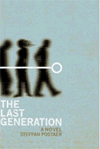
What some of you might not know is The Happy Soul Industry was not my first book. That honor goes to The Last Generation, a novel with arguably darker and more secular themes. The Last Generation imagines a world where babies no longer are being born. Instead of treating the material like science fiction, with the usual tropes (Armageddon, devastation, plague), I chose to write about the existing population, exploring how they would behave knowing that they, in fact, were the last generation.

If the concept sounds eerily like the motion picture, Children of Men that is because it is eerily like the motion picture, Children of Men. In fact, that movie in no small way, derailed the development of my novel into a TV series on NBC! It’s true. The Last Generation was in development with Touchstone TV, Phoenix Films and none other than famous Hollywood producer, Mike Medavoy. Don’t take my word for it: Variety article: The Last Generation

Alas, NBC balked at the pilot script (not written by me) and the show was halted before pre-production began. There were numerous reasons for canceling the show but none more heartbreaking than the emergence of Children of Men –a film, by the way, which I still haven’t seen.

Given my recent discussion of plagiarism in advertising, the parallels here are hard to ignore. I think it only fair to state my book came out several years before the movie. However, Children of Men was based on a book (unknown to me), which came out years before mine. I guess that makes me an accidental plagiarist.

Needless to say, had I known about The Children of Men, let alone read it, I never would have written The Last Generation. While Happy Soul differs from the storyline of the movie, the central conceit is identical. That fact alone would have diffused my inspiration to write. And, as you might imagine, inspiration is key when writing a novel. The Last Generation took me a year to write and another two years to rewrite. After that, I had to find a literary agent, publisher and then a Hollywood agent. Still more rewrites. And then we had to pitch. We’re talking five or six years of my life just to get to where I got.

Sure, I was disappointed and frustrated by my turn in Hollywood. But I was also very proud. In terms of movie deals I got farther than most. More importantly, I adored every minute of it. In fact, I hope to go through it again with The Happy Soul Industry –a story, I believe, which offers even more promise as a film than The Last Generation. To that end Sleeping Giant MGMT in Los Angeles is currently shopping the book. We shall see…

For those interested, The Last Generation is on Amazon. Thank you for your readership. God bless.

Follow me on Twitter


Leo & Leno: kickin’ it old school.

I’ve tweeted once or twice about the drama between Jay Leno and Conan O’Brien. I likened their tribulations to that of two big, dumb advertising agencies bickering over diminishing relevance and lost revenues. In fairness to both parties, I haven’t watched either of their shows in years.

In College, my roommates and I used to collect around the communal TV and watch The Late Show with David Letterman. He was the hip alternative to Johnny Carson. Not your father’s talk show. Later, my wife and I watched “Dave” before going to bed. On at 11:30 PM, she would invariably fall asleep on the couch. I got bored too. Toward the end, we were only sticking around for Dave’s Top Ten List, a cultural touchstone (albeit a minor one). Then came the Internet. Talk shows became hopelessly old-fashioned and, in my opinion, irrelevant. Listening to Goldie Hawn shrilly shill for her latest crappy movie held zero interest.

The rise and fall of late night talk shows does resemble the struggle in our beleaguered advertising industry. With the marginalization of TV and the emergence of new media, ad agencies have had a hell of a time staying relevant. The key to survival is reinvention. Some agencies will do better than others. As will certain talk show formats. Given the parallels, I thought it might be fun to play a little game: comparing talk show hosts and advertising agencies. Who is most like which?

David Letterman and BBDO. Currently at the top of their respective heaps. A tad arrogant. That hint of scandal. Getting on. Can these two New York franchises stay on top, if not culturally important?

DDB and Conan O’Brien. Rock stars in the late nineties, both could consistently bring the funny. Now one detects a whiff of desperation. Still, with pedigrees like these one can’t ever count them out. And why would you?

Leo Burnett and Jay Leno. Old school. Lots of shtick. American as Chevy and perhaps just as vulnerable. Both have big chins against the constant jabs of a modern world. When they try being hip it makes me cringe. Leo & Leno: Just do your thing!

Odd fact: In the 70’s and 80’s Burnett and DDB feuded constantly (and notoriously) over the McDonald’s account.

Crispin Porter & Bogusky… The irreverent bad boys. Are they more like Craig Ferguson, Jon Stewart or Colbert? Polarizing but relevant, they’re usually the only ones worth visiting You Tube to view.

My shop? Euro RSCG is like Jimmy Fallon. Occasionally brilliant. Occasionally not. New… random…but with lots of chutzpah! We’ll see.

Did I miss anyone? Who cares? It’s only a game. And this is only a silly blog by a silly man. My intent wasn’t to critique or offend. I haven’t listed a shop I wasn’t (or wouldn’t be) honored to work for. ;-)

Follow me on Twitter

The Happy Soul Industry website